Piedmont, West Virginia
Historical Overview
& Resources
Location & Geography
Piedmont is located at the foot of the Allegheny Mountains in Mineral County, West Virginia. Situated on a bend of the North Branch of the Potomac River, the town sits at an elevation of 871 feet. The name “Piedmont” reflects its location at the mountain’s base.
Early History & Land Grants
In 1664, King Charles II issued a sweeping land grant to several loyal supporters—Lords Culpeper and Berkeley, Sir William Morton, and Sir Dudley Wyatt—giving them ownership of all land between the Potomac and Rappahannock Rivers. This enormous proprietary, known as the Northern Neck Grant, stretched from the Chesapeake Bay westward to the headwaters of the Potomac, placing the land that would become Piedmont, West Virginia, firmly within its boundaries. Over time, the grant passed to the Culpeper and Fairfax families, whose land office controlled settlement and surveying in the region for more than a century.
By 1681, Thomas, Lord Culpeper had become the sole owner of the vast Northern Neck Proprietary, a royal grant covering more than five million acres between the Potomac and Rappahannock Rivers. Upon his death, the entire estate passed to his daughter, Catherine Culpeper, who married Thomas Fairfax, 5th Lord Fairfax of Cameron. Through this marriage, the Proprietary entered the Fairfax family, and in 1719 their son, Thomas Fairfax, inherited the full grant. As the 6th Lord Fairfax, he controlled land sales and surveys across the region—including the Potomac headwaters where Piedmont, West Virginia, would later rise.
In the 1730s, surveyor William Mayo led one of the first major expeditions into Lord Fairfax’s vast Northern Neck Proprietary, charting the Potomac headwaters and the rugged terrain that includes present‑day Piedmont. His maps and journals became the foundational record of the region, guiding Fairfax land agents and later surveyors for decades. Mayo’s work provided the first reliable descriptions of the New Creek valley and laid the geographic groundwork for all future settlement and development in the Potomac Highlands.

Early Settlement
Local tradition holds that by 1815 the only resident living on the land that would become Piedmont was a frontier widow known simply as Widow Burns. Her solitary cabin along the North Branch of the Potomac highlights just how remote and undeveloped the region remained in the early nineteenth century. With no roads, no industry, and only scattered farms miles away, the future townsite was still wilderness until the arrival of the Baltimore & Ohio Railroad decades later.
Industrial Spark (1836-1851)

In 1836, General Duff Green—an influential industrialist and political figure—secured a charter for the Union Potomac Company, granting it authority to build railroads, canals, and coal operations along the upper Potomac. The company acquired large tracts of land near present‑day Piedmont and promoted the region’s rich coal and iron resources. Although the venture did not achieve all of its ambitious goals, it marked the first major industrial effort in the area and laid early groundwork for the development that would accelerate with the arrival of the Baltimore & Ohio Railroad.

Early Industrial Foundations
Arrival of the B&O Railroad (1851–1854)
The story of Piedmont’s rise begins long before the first locomotive steamed through the North Branch valley. In the 1830s, investors and industrialists were already eyeing the rugged Allegheny Front as a gateway to coal, iron, and transportation. In 1836, General Duff Green secured a charter for the ambitious Union Potomac Company, envisioning a network of canals, railroads, and mineral operations that would unlock the region’s economic potential. Though his canal plans ultimately failed, the land he assembled passed to Robert Lyon, whose New Creek Company recognized the true value of the area’s rich coal seams. Their early coal shipments helped persuade the Baltimore & Ohio Railroad to abandon wood‑burning locomotives in favor of coal — a transformative shift that made mountain railroading possible. By the time the B&O pushed westward in the early 1850s, the groundwork had been laid for Piedmont to become one of the most important industrial hubs on the line.

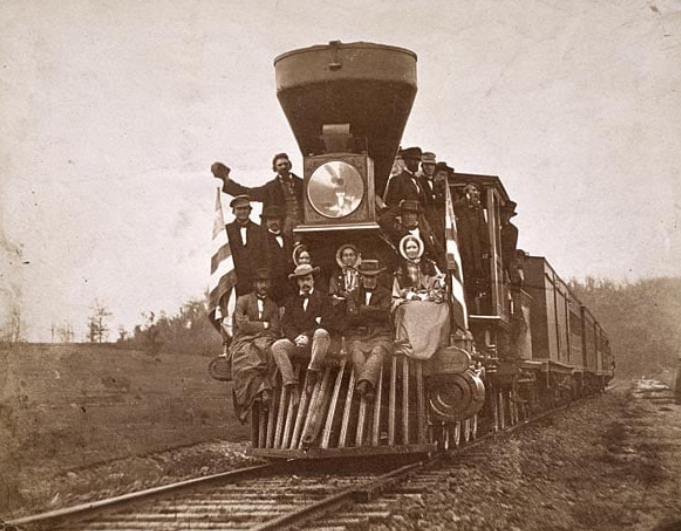
The B&O Railroad extended its main line through Piedmont in 1852, bringing with it:
• A major construction base at the foot of the Allegheny Front, where engineers and laborers staged the climb over the steepest grade on the entire line.
• Machine shops, repair facilities, and coaling stations, turning Piedmont into a critical service point for locomotives heading west.
• A surge of workers, merchants, and families, rapidly transforming the once‑isolated river bend into a bustling industrial settlement.
• Regular freight and passenger service, linking the community to Cumberland, Baltimore, and the expanding western frontier.
• A booming coal trade, as nearby mines supplied the B&O with the fuel that powered its locomotives up the mountain.
• The foundations of a permanent town, with streets, businesses, boarding houses, and churches emerging almost overnight.
Explosive Growth: 1854–1856
Between 1854 and 1856, Piedmont underwent a dramatic transformation. What had begun just a few years earlier as a cluster of B&O work camps suddenly evolved into a permanent settlement shaped by coal, steam, and the relentless push of the railroad. As the B&O established machine shops, coaling stations, and repair facilities at the base of the Allegheny Front, workers and their families poured into the valley. Boarding houses, taverns, supply stores, and small businesses sprang up along the riverbank to serve the growing population. Streets were graded, lots were surveyed, and the settlement began to take on a defined layout rather than the scattered, makeshift arrangement of its earliest days.
In 1855, Piedmont had become a bustling industrial hub — noisy, crowded, and alive with the movement of trains, wagons, and laborers. Coal from the surrounding mountains fueled the locomotives that tackled the steep mountain grade, and the town’s strategic location made it indispensable to the B&O’s westward expansion. The rapid growth created a sense of permanence and identity, and by 1856, the community was ready for formal recognition. That year, the Virginia General Assembly officially incorporated the Town of Piedmont, marking the moment the settlement stepped out of its frontier origins and into its role as a vital railroad town.

Piedmont’s Incorporation in 1856
Piedmont was officially incorporated as a town in 1856, at a time when the region was still part of Hampshire County, Virginia. The Baltimore & Ohio Railroad had transformed the area only a few years earlier, drawing workers, merchants, and families to the foot of the Allegheny Front and turning a once‑isolated river bend into a thriving industrial community. Incorporation marked Piedmont’s transition from a railroad encampment into a recognized municipality with its own identity and civic structure. Importantly, this milestone occurred seven years before West Virginia became a state, meaning Piedmont began its life as a Virginia railroad town long before it joined the new state created in the midst of the Civil War.
Piedmont Becomes Part of West Virginia in 1863
When the Civil War erupted in 1861, Piedmont found itself in a region deeply divided in loyalty but strategically essential to the Union. The Baltimore & Ohio Railroad — Piedmont’s lifeline — was one of the most important transportation routes in the nation, carrying troops, supplies, and communication between Washington and the western states. Control of the line was vital, and Piedmont’s machine shops, coaling stations, and rail yards made it a key military target throughout the war. As western Virginians pushed for separation from Confederate‑leaning eastern Virginia, the B&O corridor became a stronghold of Union support. On June 20, 1863, the new state of West Virginia was admitted to the Union, and Piedmont — once a Virginia railroad town — officially became part of the nation’s newest state. The shift marked a profound political and cultural turning point, aligning Piedmont with a state whose identity would be shaped by industry, mountains, and the railroad that had built the town itself.
Creation of Mineral County 1866
Just a few years after West Virginia became a state, the communities along the upper Potomac were experiencing rapid growth driven by railroads, coal, and industry. Towns like Piedmont and nearby New Creek (later Keyser) had expanded far beyond their early railroad origins, and residents found themselves increasingly connected to one another through commerce, transportation, and shared daily life. At the time, the region was still part of Hampshire County, whose government was centered many miles away in Romney. As the industrial corridor continued to develop, local leaders and citizens began to advocate for a new county that could better serve the needs of these growing towns.
Their efforts led to the creation of Mineral County on February 1, 1866, carved from the eastern portion of Hampshire County. The name reflected the area’s abundant natural resources—especially coal and iron ore—which had become central to the region’s economy and identity. With its formation, Mineral County brought local governance closer to the communities shaped by the Baltimore & Ohio Railroad, and Piedmont emerged as one of its most important industrial centers. The new county marked a fresh chapter in the region’s civic history, linking its early Virginia roots with its expanding role in the young state of West Virginia.
Post‑Boom Railroad History
The Potomac and Piedmont Coal and Railroad Company (1866)
In 1866, the same year Mineral County was created, industrialist Henry Gassaway Davis launched the Potomac and Piedmont Coal and Railroad Company with a clear goal: to open the rich coal seams of the Elk Garden region and connect them to national markets. Piedmont played a central role in this plan. As the nearest major rail point on the Baltimore & Ohio line, Piedmont became the company’s primary shipping and transfer hub. Coal mined in the mountains above Elk Garden was hauled down to Piedmont, where it was loaded onto B&O trains bound for Baltimore, the Ohio Valley, and industrial centers across the East.
This new flow of coal brought steady work to Piedmont’s rail yards, shops, and businesses. It strengthened the town’s position as a key industrial gateway at the foot of the Allegheny Front and deepened its connection to the surrounding mining communities. Davis’s investment also encouraged additional development in and around Piedmont, as merchants, laborers, and families arrived to take part in the expanding coal economy. By linking Elk Garden’s mines to the national rail network through Piedmont, the company helped shape the town’s identity as a vital shipping point and industrial center in the decades that followed.

Expansion Beyond the B&O (1870s–1900s)
By the 1870s, Piedmont had firmly established itself as one of the Baltimore & Ohio Railroad’s key mountain towns, but the decades that followed brought new layers of growth and change. As the B&O continued to modernize its operations, Piedmont’s rail facilities expanded to meet the demands of heavier locomotives, increased freight traffic, and the region’s growing coal industry. Machine shops were upgraded, additional sidings and yards were added along the river, and the town’s workforce grew to include skilled mechanics, carpenters, and laborers who kept the mountain division running day and night.
At the same time, Piedmont’s economy began to diversify beyond the B&O. Coal from the surrounding mountains flowed through town in ever‑increasing volumes, linking Piedmont to a wider network of mines, coke ovens, and industrial centers across the Mid‑Atlantic. New businesses opened to serve both railroad employees and local families, and the town’s streets filled with the energy of a community shaped by industry, transportation, and steady population growth. By the turn of the twentieth century, Piedmont had become more than a railroad base—it was a regional hub whose identity blended the legacy of the B&O with the broader economic forces transforming the Potomac Highlands.
Piedmont and the Rise of the West Virginia Central & Pittsburg Railway (1880–1881)
By 1880, Piedmont had already become a major shipping point on the Baltimore & Ohio Railroad, but the next wave of development would deepen its importance even further. That year, Henry Gassaway Davis and his associates began constructing a new rail line from the B&O junction near Bloomington, Maryland, heading south along the North Branch of the Potomac River. This line was designed to open the Elk Garden coal fields and connect them directly to national markets.
For Piedmont, the project was transformative. Although the new line physically branched off at Bloomington, Piedmont remained the operational heart of the region, serving as the primary hub where coal, supplies, workers, and rail traffic converged. The town’s machine shops, yards, and established B&O infrastructure made it the natural support center for the expanding network. Miners, merchants, and railroad crews moved through Piedmont daily, and the town’s businesses grew to meet the demands of the new industry.
In 1881, the line reached Elk Garden, and the route officially became part of the West Virginia Central and Pittsburg Railway (WVC&P). With this connection, coal from the high Allegheny ridges flowed down to the Potomac valley and into the B&O system, with Piedmont acting as the key transfer and service point. The WVC&P’s arrival strengthened Piedmont’s role as a regional industrial gateway and tied the town even more closely to the mining communities developing in the mountains above it.
By the end of the decade, Piedmont was no longer just a B&O railroad town—it was a central link in a growing web of coal, rail, and commerce that shaped the economic identity of Mineral County and the surrounding Potomac Highlands.

Connected Communities and Changing Times (1900s–1950s)
By the early 20th century, Piedmont had become fully woven into the broader network of railroads, coal operations, and industrial communities stretching across the Potomac Highlands. The Baltimore & Ohio Railroad remained the town’s economic anchor, but Piedmont was no longer just a single stop on a single line. Instead, it functioned as part of a larger regional system that included the West Virginia Central & Pittsburg Railway, the Elk Garden coal fields, and the growing industrial towns to the south and west. Coal trains moved through Piedmont daily, and the town’s shops, yards, and businesses supported a steady flow of workers, travelers, and freight.
During these decades, Piedmont’s neighborhoods filled with families connected to the railroad and the mines. Schools, churches, civic groups, and small businesses flourished, giving the town a strong sense of community identity. The B&O shops provided stable employment, and the town’s location at the foot of the Allegheny Front kept it central to the movement of coal and goods across the region.
But by the mid‑20th century, national trends began to reshape Piedmont’s fortunes. Steam locomotives were gradually replaced by diesel engines, reducing the need for the heavy maintenance work that had long supported the town. Coal production shifted as new mines opened elsewhere and older seams declined. Improvements in highways and trucking changed how freight moved through the region, and the once‑constant flow of rail traffic began to slow. None of these changes happened overnight, but together they marked the beginning of a gradual transition for Piedmont—from a bustling railroad hub to a quieter community adapting to new economic realities.

Industry Shifts: From Rail to Pulp and Paper
When the West Virginia Pulp and Paper Company opened its mill in Luke, Maryland, in 1888, it quickly became one of the most influential industries in the upper Potomac valley. Although the mill stood just across the river, its impact was felt most strongly in Piedmont, which supplied much of the mill’s workforce, housing, and community life. For many families, the short walk across the bridge or the daily commute along the river became a defining part of life in the region.
As the 20th century progressed, the mill grew into a major employer, eventually surpassing the railroad as Piedmont’s primary source of steady jobs. Generations of residents worked in its pulp rooms, machine halls, finishing lines, and support shops. The mill’s round‑the‑clock operations brought reliable wages to the area, and its presence helped sustain local businesses, schools, and civic organizations on both sides of the river. In many ways, the mill and the town developed together—Piedmont provided the labor force and community infrastructure, while the mill offered economic stability during decades when rail employment was beginning to decline.
The shift from rail to pulp and paper marked an important turning point in Piedmont’s history. While the B&O Railroad had built the town and shaped its early identity, the Luke mill carried Piedmont into the modern industrial era. Its influence could be seen in everything from population trends to neighborhood life, and it remained a central part of the region’s economy well into the mid‑20th century. For many residents, the mill was more than a workplace—it was a cornerstone of community life and a defining feature of the Potomac valley for over a century.

Late 20th‑Century Adaptation and Community Life After the Mill Era
As the 20th century progressed, Piedmont continued to adapt to the changing economic landscape of the Potomac valley. The Luke paper mill remained a major employer for much of the century, but even its operations evolved as global markets shifted and new technologies reshaped the pulp and paper industry. By the 1970s and 1980s, automation and consolidation reduced the number of mill jobs available, echoing the earlier decline of railroad employment. These changes affected families on both sides of the river, and Piedmont—once a bustling industrial town—entered a quieter, more residential phase of its history.
Yet through these transitions, community life in Piedmont remained strong. Local schools, churches, volunteer organizations, and long‑standing neighborhood traditions continued to anchor daily life. Residents supported one another through economic ups and downs, and the town’s small size fostered a sense of familiarity and connection that endured even as industries changed. Many families with deep roots in the region stayed, while others who moved away often maintained ties to the community through reunions, holidays, and shared memories of growing up along the North Branch.
By the late 20th century, Piedmont had shifted from an industrial hub to a close‑knit community shaped by its history, geography, and resilience. The echoes of the railroad and mill eras remained visible in the town’s layout and architecture, but its identity increasingly centered on the people who continued to call Piedmont home—families who carried forward the traditions, stories, and spirit that defined the town long after the height of its industrial years.
The Closure of the Luke Paper Mill (2019)
In 2019, the Potomac valley experienced one of the most significant economic and emotional turning points in its modern history. After 131 years of continuous operation, the Luke paper mill—long a major employer for families in both Luke, Maryland, and Piedmont, West Virginia—announced it would permanently close. Verso Corporation cited a combination of factors behind the decision, including declining demand for the grades of paper produced at the mill, rising input and compliance costs, increased imports, and infrastructure challenges. Production ended in late May, and the closure was completed by June 30, 2019.
For Piedmont, the impact was immediate and deeply felt. Generations of residents had worked at the mill, and its steady wages had supported local businesses, schools, and community life for more than a century. The mill’s shutdown meant the loss of hundreds of jobs across the region, affecting not only workers but also the families and small towns that had grown around the industry. The closure marked the end of an era that had shaped Piedmont’s identity since the late 19th century, when the mill first drew workers, commerce, and community ties across the river.
Even as the mill’s buildings began to come down in the years that followed, its legacy remained woven into the story of Piedmont—its neighborhoods, its families, and its shared memory of a time when the hum of the mill and the rhythm of shift changes helped define daily life along the North Branch of the Potomac.

Piedmont Today: Heritage, Identity, and Renewal
Today, Piedmont stands as a small but resilient community shaped by more than 170 years of history along the North Branch of the Potomac River. While the industries that once powered the town—railroads, coal, and the Luke paper mill—have changed or faded, their legacy remains visible in the landscape, the architecture, and the stories passed down through generations. Piedmont’s identity is rooted in the strength of its people: families with deep local roots, neighbors who look out for one another, and a shared pride in the town’s role in the region’s industrial heritage.
In recent years, Piedmont has focused on renewal and community‑driven growth. Residents and local leaders have worked to preserve historic sites, celebrate the town’s cultural traditions, and create new opportunities for recreation, tourism, and civic engagement. The surrounding mountains, river, and rail corridors continue to offer a strong sense of place, drawing visitors interested in history, outdoor exploration, and the unique character of the Potomac Highlands.
Even as the town has grown smaller, its spirit remains strong. Piedmont today is defined not by the industries that once dominated its skyline, but by the resilience, creativity, and commitment of the people who call it home. It is a community honoring its past while looking toward the future—one rooted in heritage, strengthened by identity, and guided by a renewed sense of possibility.


2026: A New Year, A New Website, A New Future
As Piedmont steps into 2026, the town marks an important milestone: the launch of a new digital presence that reflects its history, its people, and its vision for the years ahead. This website represents more than a redesign — it is a declaration of renewal. Just as the railroad once connected Piedmont to the nation, and the paper mill linked generations of families across the Potomac valley, today’s digital tools open new pathways for connection, opportunity, and community pride.
The new site brings Piedmont’s story into the modern era, preserving the town’s heritage while embracing the possibilities of the digital world. It offers residents and visitors a place to explore local history, discover community resources, celebrate events, and stay connected to the heart of the town. For a community shaped by resilience and reinvention, this digital step forward symbolizes a future built on both tradition and innovation.
In 2026, Piedmont stands ready to write its next chapter — one where the strength of its past meets the promise of new ideas, new connections, and a renewed sense of possibility along the North Branch of the Potomac.